
Air-to-Air Heat Pump Installation
An air-to-air heat pump heats and cools air directly in the rooms — a fast and accessible solution for apartments and homes without water-based heating.
Air-to-air heat pump installation is one of the fastest and most accessible ways to switch to energy-efficient heating. The system heats and cools air directly in the rooms using outdoor air heat, and is especially suited to apartments and homes without water-based heating. This page explains how the system works, who it suits and what you should know before installation.
What is an air-to-air heat pump
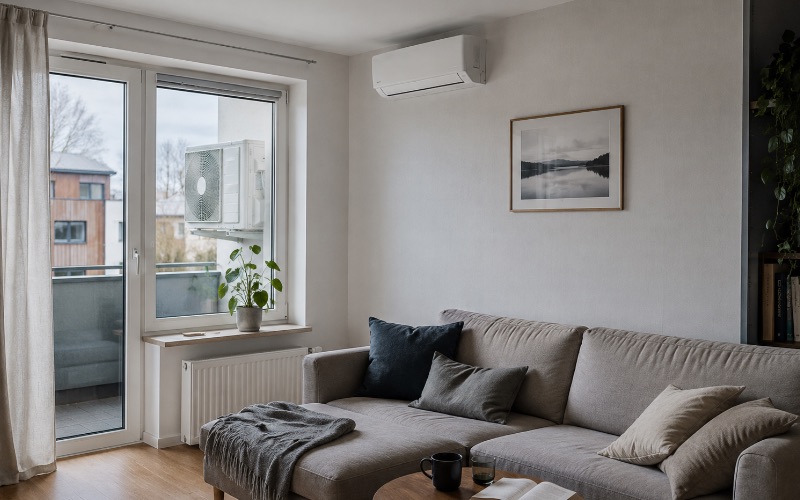
An air-to-air heat pump is a heating device that extracts heat from outdoor air and transfers it to rooms via indoor units — similar to an air conditioner that can also heat. The outdoor unit draws in air, the compressor raises the refrigerant's temperature, and the indoor unit releases warm or cool air directly into the room. Because the system doesn't transfer heat through water, it operates quickly and responds to thermostat changes in minutes rather than hours. This makes an air-to-air heat pump a flexible solution for year-round room comfort. The system consists of three main components — an outdoor unit with a compressor, an indoor unit with a heat exchanger, and connecting refrigerant lines that carry the refrigerant and wiring between the two units. Unlike air-to-water systems, an air-to-air heat pump does not heat water and does not require a buffer tank or hot water preparation module — all the energy is directed straight to heating or cooling the air.
Heating and cooling
One of the biggest benefits of an air-to-air heat pump is its two-way operation — the same system heats in winter and cools in summer. In the cold season, modern units operate efficiently down to outdoor temperatures of -20°C, and the best models retain noticeable efficiency even at -10°C to -15°C. In summer the system switches to cooling mode and maintains a comfortable temperature in the rooms even on the hottest days. This provides year-round comfort with a single unit and reduces the need for separate heating and cooling solutions. The coefficient of performance (SCOP) for air-to-air systems typically ranges from 3.0 to 4.0 — meaning that every kilowatt-hour of electricity consumed produces roughly three to four kilowatt-hours of heat. Efficiency is higher in moderate temperature conditions and decreases in very cold weather, so in the coldest months the system can be supplemented with a backup heater. For hot water preparation, an air-to-air system usually needs a separate boiler with a built-in heater or a combined solution.
Suitability
An air-to-air heat pump is especially suited to apartments and homes that don't have a water-based heating system — such as radiators or underfloor heating. It is also a good solution for spaces where a fast installation and minimal construction work are preferred. Compared to air-to-water or ground-source heat pumps, air-to-air system installation is cleaner and faster — usually taking one or two days and not requiring pipe routing or floor demolition. This makes it a popular choice both for apartment owners and homeowners looking for an accessible transition to a heat pump. The system is especially advantageous in newer buildings with good thermal insulation, where heat demand is moderate, and user reviews of air-to-air heat pumps tend to be positive. In older buildings with weaker insulation, the unit can be supplemented with an additional heater for colder days to ensure sufficient comfort throughout the season. In apartments it's also important to check the options for outdoor unit placement — facade mounting or balcony use often requires the building manager's or owners' association's consent.
Indoor unit placement
The number and placement of indoor units is one of the most important decisions in an air-to-air system project. The simplest solution is one indoor unit per room, but homes and larger apartments usually opt for a multi-split system, where one outdoor unit serves several indoor units. Wall-mounted units are more common and accessible, while cassette units built into the ceiling are more discreet and suited to rooms with higher ceilings. Correct unit placement ensures even air distribution and avoids cold corners. During the site visit, the specialist will help determine the optimal number and placement of units according to your room layout.
Noise level
Noise is an important aspect both for your own comfort and for relations with neighbors. The outdoor unit produces a certain amount of sound from the compressor and fan, so its placement should be chosen carefully. It's advisable to place the outdoor unit further from windows and rooms where noise could be disruptive — such as bedrooms. Latvia has noise regulations that limit the permissible sound level, especially near neighboring properties. The specialist will help choose the right position and, if needed, use vibration-isolating bases that reduce noise transmission.
Condensate drainage
In cooling mode, indoor units produce condensate — water droplets that form when cooling humid air. This water must be safely drained to avoid damage to walls and floors. The condensate pipe is usually routed outside or connected to the existing drainage system. Properly designed and installed condensate drainage is essential for year-round operation, since in summer the unit can produce several liters of water per day. During the site visit, the specialist will discuss possible drainage routes and choose a clean, safe solution.
Installation process
Air-to-air heat pump installation is one of the fastest heat pump types — usually taking one or two days. The process includes several clear stages: an initial site visit and technical assessment, mounting the outdoor unit with a secure bracket system, connecting to indoor units through wall openings, installing refrigerant lines and finally starting up and testing the unit.
Site visit
The specialist familiarizes themselves with the rooms, assesses outdoor unit placement, condensate drainage options and prepares a quote.
Installation
Mounting the outdoor unit on a vibration-isolating base and fixing indoor units in the planned locations.
Connection
Routing pipes and cables through the wall, connecting and tightening the refrigerant lines.
Startup
System testing, leak checks, configuring settings and a usage briefing.
Cost factors
Air-to-air heat pump installation is at a lower price level than air-to-water or ground-source systems. Unit costs typically range from €1,200 to €4,000 depending on capacity and brand, while the full installation price — including materials and labor — tends to run from €1,500 to €5,000 for multi-split systems. The main cost factors are the unit's capacity, the number of indoor units (multi-split systems cost more), the complexity of outdoor unit placement, and any additional work required — such as electrical improvements or wall penetrations. Price is also influenced by the brand's market position, the presence of inverter technology, and additional features such as built-in air purification or smart control via a mobile app. Before choosing, the specialist will help assess the most suitable capacity and unit configuration for your property during the site visit, reducing the risk of overpaying or undersizing. For detailed cost factors and a comparison with other heat pump types, see our heat pump installation price page.
How does the service work?
- ✓Free request
- ✓Our specialist in your region
- ✓Price quote after a site visit
- ✓Your data is safe with us
Frequently asked questions
See also
Interested in air-to-air heat pump installation?
We'll be in touch within 5 minutes of you submitting the form!