
Heat Pump Installation in Latvia
Professional heat pump installation for homes and apartments — air-to-water, air-to-air and ground-source systems. Get a price quote from our specialist in your region.
Heat pump installation is one of the most effective ways to reduce heating costs and switch to renewable energy. In Latvia's climate, heat pumps provide stable heating even in the winter months, and many models can also cool rooms and prepare hot water. This page covers the key questions you should know before installing a heat pump — from system selection to commissioning.
Choosing a system — air-to-water, air-to-air or ground-source
Heat pump installation starts with choosing the right system type to match your building's heating method and heat requirements. Three system types are most common in Latvia.
Air-to-water heat pumps absorb heat from outdoor air and pass it to the water-based heating system. They suit homes with radiators or underfloor heating and can also prepare hot water. This is the most popular solution in Latvian private homes, as it combines high efficiency with relatively reasonable costs.
Air-to-air heat pumps heat and cool air directly in the rooms. They are ideal for apartments and homes without water-based heating, as well as situations where a fast and relatively cheap solution is preferred. Installation in this case is faster and simpler, but hot water needs to be addressed separately.
Ground-source heat pumps use the heat of the soil or groundwater via vertical boreholes or horizontal collectors. They offer the highest seasonal efficiency and longevity, but installation requires land area and a larger initial investment.
The importance of the building's heat loss
Before installing a heat pump, it is essential to assess the building's heat loss. Heat pumps work most effectively in low-temperature heating systems where the required flow temperature does not exceed 35–50°C. In a well-insulated home with low heat loss, the heat pump operates at a high SCOP value, which reduces electricity consumption.
A heat loss calculation determines the required heat pump capacity and affects the size of the chosen unit. In older homes without good insulation, the required capacity can be two or three times greater than in a new build of the same floor area, which directly affects the installation price. That's why many specialists first recommend improving the building's thermal insulation and windows before turning to heat pump installation.
During the site visit, the specialist calculates the building's heat loss in W/m² and determines the required capacity at the design outdoor temperature. This calculation is the basis for both equipment selection and planning the installation work.
Radiators and underfloor heating
Installing a heat pump into an existing heating system requires careful compatibility assessment. Underfloor heating is an ideal match for a heat pump, as it operates at a low flow temperature (25–35°C), which allows the unit to reach maximum efficiency.
Radiator systems are not excluded — a heat pump can be integrated into an existing radiator layout, but keep in mind that a heat pump operates at lower temperatures than traditional boilers. This means existing radiators may not release enough heat, especially older cast-iron or steel models. In such cases, larger radiator sizes, additional heat-emitting surfaces or a separate circulation pump may be needed to ensure sufficient flow.
Hybrid systems, where underfloor heating warms the ground floor and radiators remain upstairs, are becoming increasingly common in Latvia. Installation in this case includes fitting mixing valves and thermostatic controllers so that differently zoned systems can operate at different flow temperatures.
Outdoor and indoor unit placement
Heat pump installation includes choosing the location for the outdoor unit, which significantly affects the unit's performance and noise level. The outdoor unit should be placed in a spot with good airflow — without obstructions that would restrict air intake or exhaust. Walls, dense vegetation or other nearby objects can reduce the unit's output and increase electricity consumption.
Noise assessment matters both for your own comfort and for relations with neighbors. Latvian regulations set limits on the sound pressure level generated by outdoor units, especially near neighboring property boundaries. The specialist chooses the location and, if needed, uses a vibration base or sound-absorbing elements.
The indoor unit's location is chosen in a room with access to pipework and electrical wiring — usually a utility room, basement or a purpose-built cabinet. Space must also be provided for a buffer tank and hot water boiler, if the system includes them.
Electrical connection
Heat pump installation requires suitable electrical wiring. Most home heat pumps exceeding 3–4 kW capacity run on a three-phase connection (400V). A two-phase 230V connection is suitable for smaller units — mainly air-to-air models and more powerful air source heat pumps under 8 kW.
An appropriate circuit breaker and fuses must be provided in line with the unit's capacity. It's also important to ensure proper residual current protection (RCD), since the outdoor unit is exposed to moisture. Some homes will need to additionally order a capacity increase from the grid operator, which extends the installation timeline.
A professional installer always checks the condition of the existing electrical wiring, the distribution panel's capacity and the fuse rating, so that the heat pump's commissioning proceeds safely and in line with regulations.
Installation steps
Heat pump installation is a structured process involving several sequential stages. Each stage builds on the previous step, and transparency in this process reduces surprises for both you and the specialist.
Site visit
The specialist visits your property, assesses the building's heat loss, the existing heating system and the options for placing the outdoor unit. During the site visit, the required capacity and suitable unit type are clarified.
Project
After the site visit, a technical project is drawn up with the unit specification, pipe layout, electrical requirements and materials list. A price quote is also provided at this stage.
Installation
The outdoor unit, indoor unit, pipework, buffer tank, circulation pumps and control system are installed. Installation also includes electrical connection and safety device installation.
Commissioning
The unit is started up, program settings are configured, the cooling system is checked and the system is tested. You receive user documentation and warranty details.
Cost factors
The price of heat pump installation in Latvia varies and depends on several factors. The main ones are the system type and unit capacity, the building's heated floor area, the condition of the existing heating system and any additional work required — such as installing a buffer tank, replacing pipework or rebuilding the electrical wiring.
Air-to-air systems are usually the cheapest and fastest to install. Air-to-water heat pump installation requires more time for hydraulic work, while ground-source heat pump installation includes drilling a borehole or building a collector, which is the largest cost item. For detailed cost factors and typical price ranges, see our price page.
Warranty and commissioning
Professional heat pump installation ends with commissioning and handover of documents. After startup, the specialist checks the unit's operation in various modes, sets the heating curves and hot water temperature, and walks you through the control panel's functions and everyday use.
The warranty for the unit itself and for the installation work is usually issued separately. The unit's warranty is provided by the manufacturer and can be 2 to 7 years or more, depending on the brand and registration. The installation warranty is provided by the specialist who carried out the work, and it usually covers installation defects and leaks.
You are handed the user documentation, electrical wiring diagrams, warranty papers and a maintenance schedule. Most manufacturers require annual preventive maintenance to keep the warranty valid — so it's useful to agree on ongoing maintenance cooperation or register the unit in a maintenance system already at the time of installation.
How does the service work?
- ✓Free request
- ✓Our specialist in your region
- ✓Price quote after a site visit
- ✓Your data is safe with us
Frequently asked questions
See also
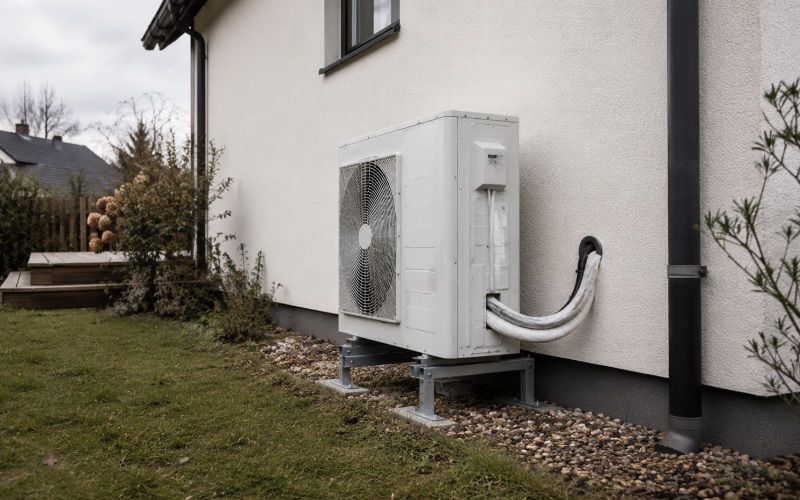
Air-to-water heat pump installation
The most popular solution for homes with water-based heating — radiators or underfloor heating.
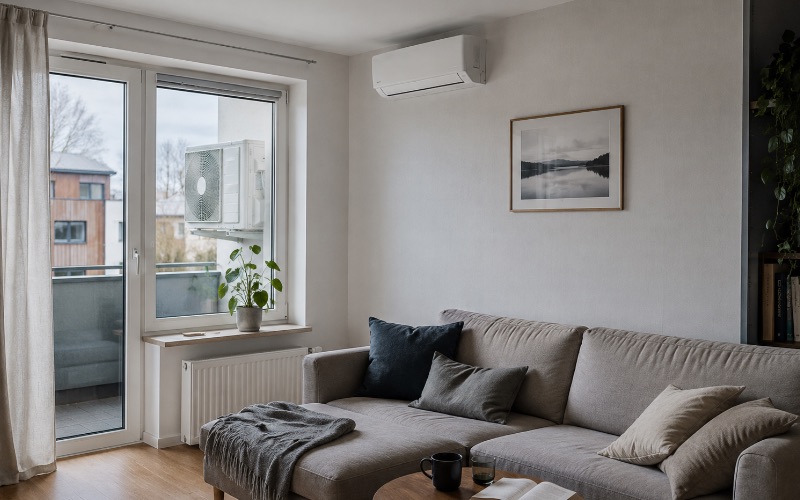
Air-to-air heat pump installation
Heating and cooling in rooms — suited to apartments and homes without water-based heating.
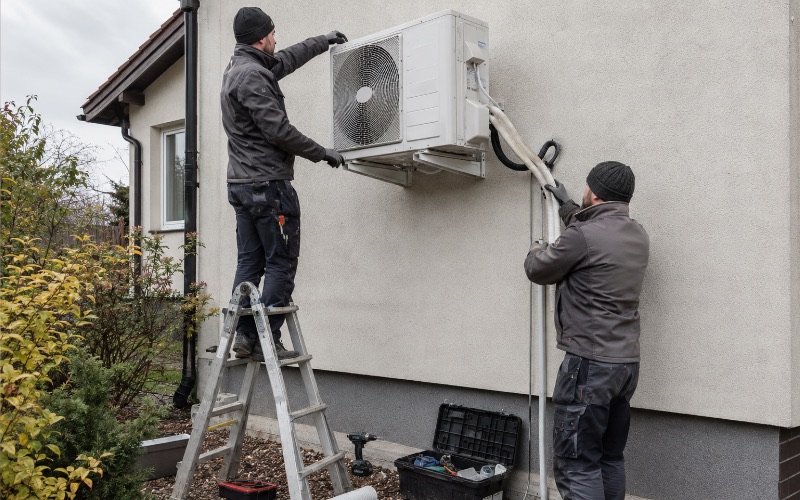
Heat pump installation price
Detailed cost factors and indicative prices for different systems.
Interested in heat pump installation?
We'll be in touch within 5 minutes of you submitting the form!