
Heat Pump for a House
Which heat pump should you choose for a private house? Three main solutions — air-to-water, air-to-air and ground-source heat pump — each with different advantages and costs. Get advice and a price quote from our specialist in your region.
A heat pump for a house is one of the most effective ways to cut heating costs and switch to renewable energy. Three main heat pump types are available for Latvian private homes, and the choice depends on the building's heating system, insulation, available land area and budget. This page covers the key aspects that will help you decide which heat pump is most suitable for your house.
Which heat pump to choose for your house
The choice starts with a simple question — does the house have water-based heating or not. If there are radiators or underfloor heating with circulating water, the most suitable option is usually air-to-water heat pump installation — it integrates with the existing system and also provides hot water. If there's no water-based heating and it's difficult or impractical to install one, the best option is an air-to-air heat pump, which heats air directly in the rooms. If land is available and you want maximum long-term efficiency, the option to choose is a ground-source heat pump.
Each type has its own strengths — air-to-water is the most versatile, air-to-air is the fastest and cheapest to install, and a ground-source heat pump is the most expensive to buy but has the lowest operating costs. Making the right choice requires assessing the building as a whole, not just the heating system.
Air-to-water — the most popular choice
The air-to-water heat pump is the most popular heat pump type for Latvian private homes, and for a clear reason — it heats water for radiators and underfloor heating, and also prepares hot water for domestic use. It integrates with an existing water-based heating system without major rebuilding, which makes heat pump installation for a house with water-based heating a relatively straightforward process.
Modern air-to-water units maintain high efficiency even down to –20°C outdoor temperature, so Latvia's climate poses no difficulty. Underfloor heating is an ideal pairing for this heat pump type, since it operates at low supply temperatures and allows the maximum seasonal efficiency (SCOP) to be reached. An existing radiator system can also be integrated, though larger radiators or additional heat-emitting surfaces may be needed.
A typical 6–10 kW air-to-water heat pump with installation in Latvia indicatively costs from €5,000 to €12,000, depending on the unit, buffer tank, hot water cylinder and any additional work required. Read more about costs on the price page.
Air-to-air — a simpler solution
For homes without water-based heating, or where installing a water system isn't cost-effective, an air-to-air heat pump is a simpler and faster solution. It heats air directly in the rooms with one or more indoor units and can also cool in summer — a useful feature usually not available with water-based heat pumps without an additional system.
This heat pump type is also suited as supplementary heating for an existing heating system — for example, if the main heating is wood or pellets, but you want a more efficient and comfortable solution during the shoulder season and milder winter days. Installation is quick, usually within 1–2 days, without any hydraulic work or mess. It's also the cheapest option — indicatively €1,500–€5,000 with installation.
Ground-source heat pump — maximum efficiency
The ground-source heat pump is the most efficient heat pump type, as it uses stable ground heat year-round. Even on the coldest winter days, the ground at a depth of several metres maintains a relatively constant temperature, letting the unit run at high efficiency regardless of outdoor air temperature.
It requires available land area — boreholes at depth (typically 80–150 m) or horizontal collectors at 1–1.5 m depth. Ground-source heat pump installation is more expensive than air-to-water, indicatively €8,000–€18,000 with boreholes, but in the long run it's the most cost-effective solution due to lower electricity consumption. It's suited to homes with low heat loss and water-based heating, where the owner is planning a long-term investment.
What to consider
Before making a decision, it's important to evaluate several factors that directly affect both the choice and the installation costs and the unit's performance in the years ahead.
- Insulation — a well-insulated home needs a smaller-capacity unit and lower costs.
- Home size — the heated floor area determines the required capacity and unit price.
- Existing heating system — water-based heating favors air-to-water or ground-source; without it — air-to-air.
- Budget — air-to-air is the cheapest, air-to-water is mid-range, ground-source is the most expensive to install.
- Land availability — a ground-source heat pump needs space for boreholes or collectors.
These factors are interrelated — for example, a poorly insulated home may need a larger-capacity unit, which raises both purchase and operating costs. It's often worthwhile to first improve the building's insulation before installing a heat pump, which reduces the required capacity and extends the unit's service life.
Heat capacity calculation
One of the most important, yet often overlooked, aspects is correctly determining the heat pump's capacity. Heat pump installation for a house must not happen without a heat-loss calculation — that is the basis on which the unit's capacity and type are chosen.
A unit that's too small won't be able to heat the home on the coldest winter days, and the system will need to be supplemented with a backup heater, which increases electricity consumption. A unit that's too large will run in short cycles — switching on and off quickly, which increases compressor wear, shortens service life and reduces seasonal efficiency.
The correct capacity is determined by a specialist based on a calculation of the building's heat losses, which takes into account the insulation of walls, windows, doors and roof, as well as the ventilation type. During the site visit, the specialist also assesses the existing heating system and the need for a buffer tank, which ensures smooth unit operation and extends its service life.
After you submit the form, we will contact you to clarify details and, if needed, arrange a site visit at your property. The request is free and non-binding.
How does the service work?
- ✓Free request
- ✓Our specialist in your region
- ✓Price quote after a site visit
- ✓Your data is safe with us
Frequently asked questions
See also
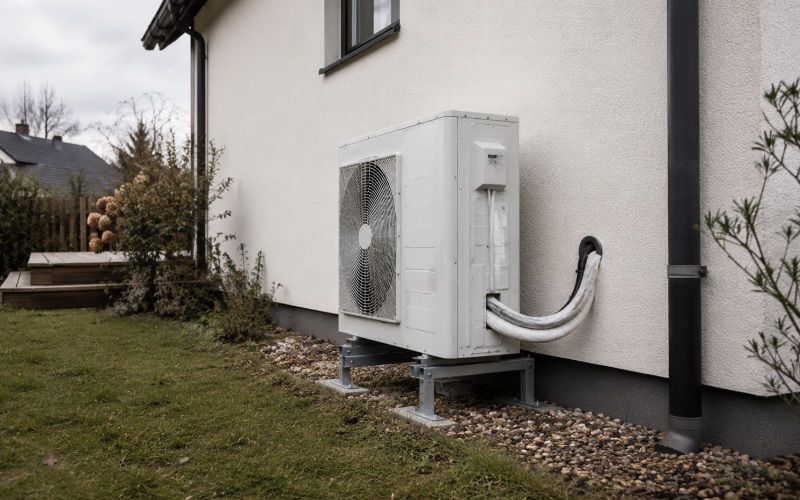
Air-to-water heat pump installation
The most popular solution for homes with water-based heating — radiators or underfloor heating.
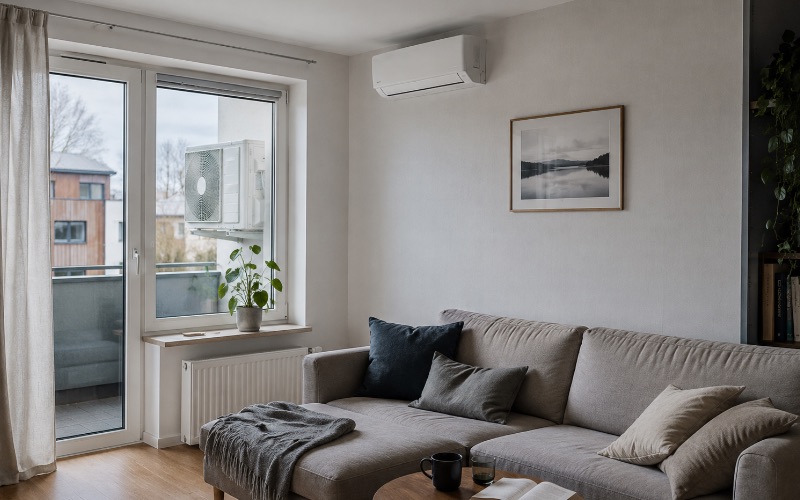
Air-to-air heat pump installation
A simpler solution for homes without water-based heating — heating and cooling in the rooms.
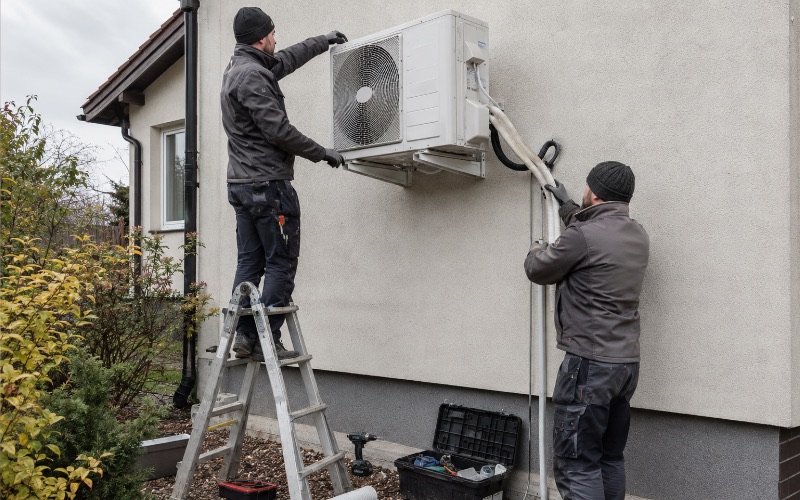
Heat pump installation price
Detailed cost factors and indicative prices for different heat pump systems.
Heat pump for a house — get advice
Free request — we'll be in touch within 5 minutes!